
In Evil Origin, from developer and publisher Kevin Musto, we play a Kresnik hunting vampiric demons known as Kudlak. This gothic horror JRPG launched on Steam for Windows on 19 November 2026: turn-based, story-minded – and, in the version that shipped, still not ready.
Table of contents
A dark idea that isn't ready yet
Evil Origin has a clear pitch: a gothic horror JRPG in which we hunt Kudlak as a Kresnik, roam dungeons and pick up sidequests in Nogard. The anime look and the handcrafted cutscenes give individual scenes a face, and the missing-wife setup pulls us in at first.
Once we are actually playing, that impression does not hold. The launch build felt unfinished to us, important details were never properly explained, and we did not get far before we wanted to stop. The skeleton of a classic JRPG is visible, but the game does not carry it. There is potential here – this version does not cash it in.
What we liked
✅ A moody gothic-horror idea with Kresnik, Kudlak and an anime aesthetic
✅ Turn-based combat, dungeons and the hub town of Nogard form a clear JRPG framework on paper
✅ Hand-drawn portraits and cutscenes give individual scenes a face
What bothered us
❌ The launch feels unfinished, and we dropped out early
❌ The game does a poor job of explaining things we needed to know
❌ The systems never deliver on the potential of the premise
How we rate
- 90–100Legendary
- 80–89Very good
- 70–79Good
- 60–69Okay
- 5250–59Mediocre
- < 50Weak
At PlayInsider we rate every game individually and always against the expectations of its genre. We judge the story of an action game or adventure by its narrative quality. In a simulation or management game, on the other hand, what counts is what the genre typically offers. This keeps our ratings fair and comparable within a genre.
When Evil Origin sends us to the castle outside Nogard
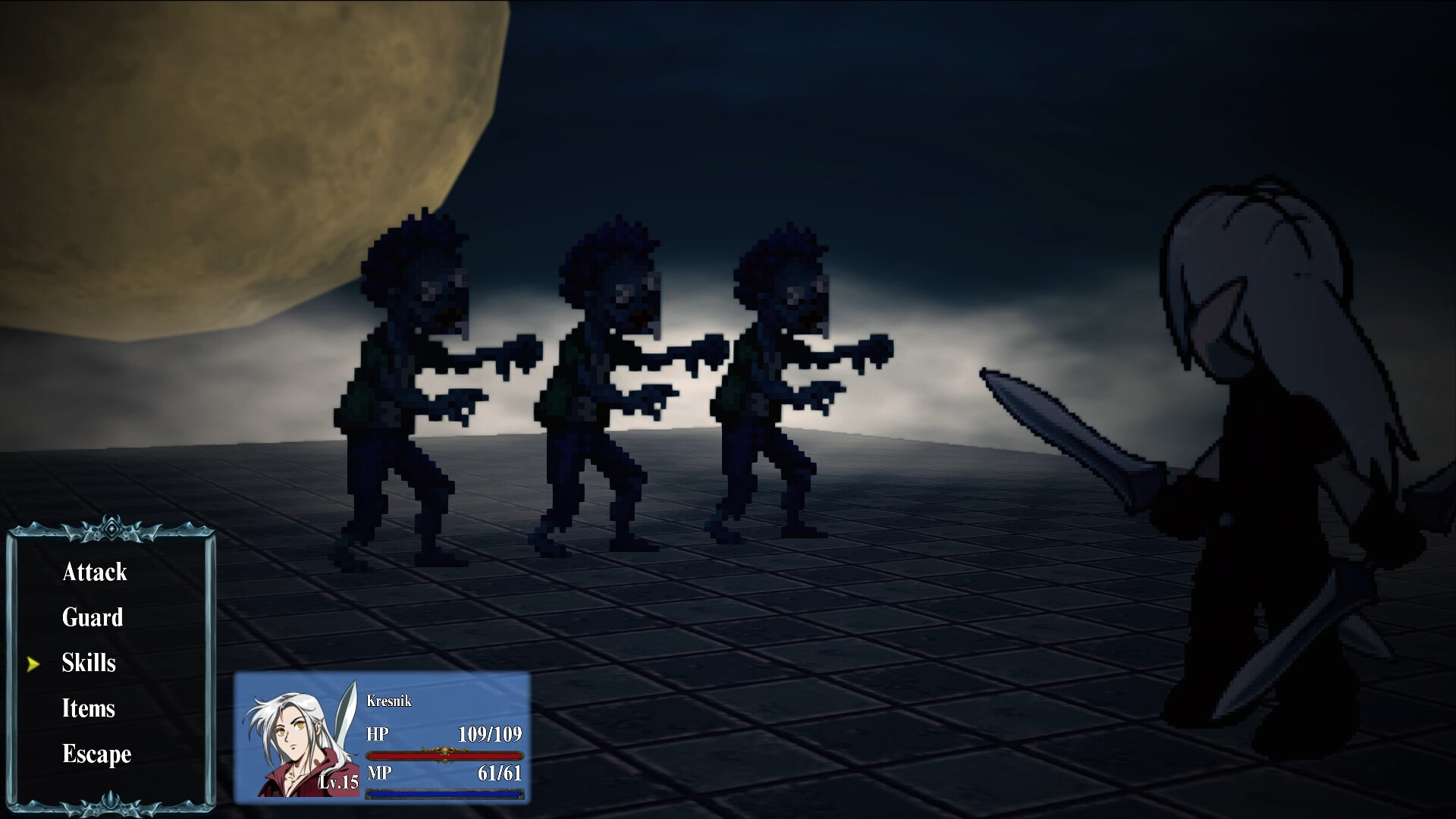
On paper, Evil Origin is the kind of JRPG that usually hooks us: traditional turn-based combat, deep dungeons, a hub town with sidequests, and a hero who faces demons with twinblades and magic. Full controller support is there, and we play alone. Those first steps into the abandoned castle outside Nogard feel like a classic setup.
In practice, too little of that sticks. The battles have a clear menu and some snap, but the systems do not hold our attention for long. We hit a point fairly quickly where we no longer wanted to continue – not because we were bored of the genre, but because the loop never felt finished and the game does a poor job of bringing us along. You can see the potential of a dark JRPG. The game does not keep us inside that castle.
Anime portraits in gloomy 3D dungeons
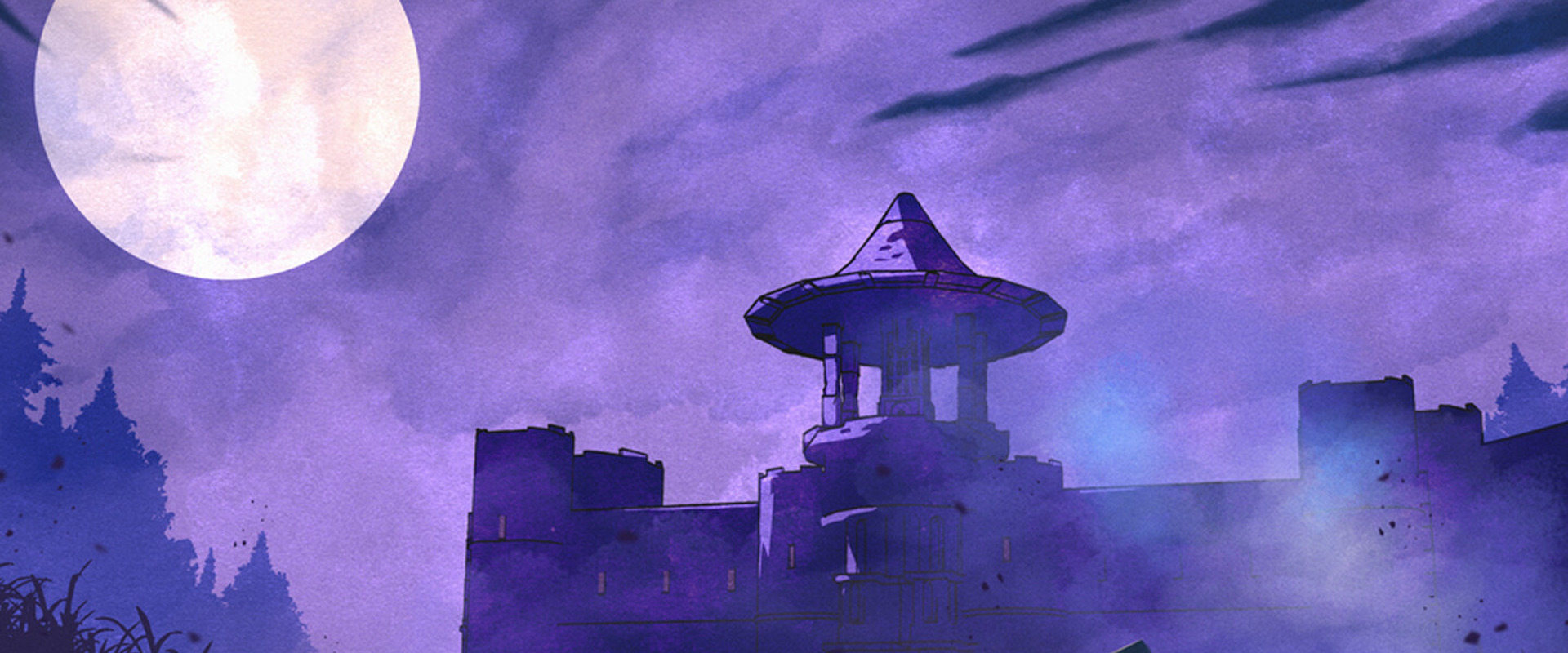
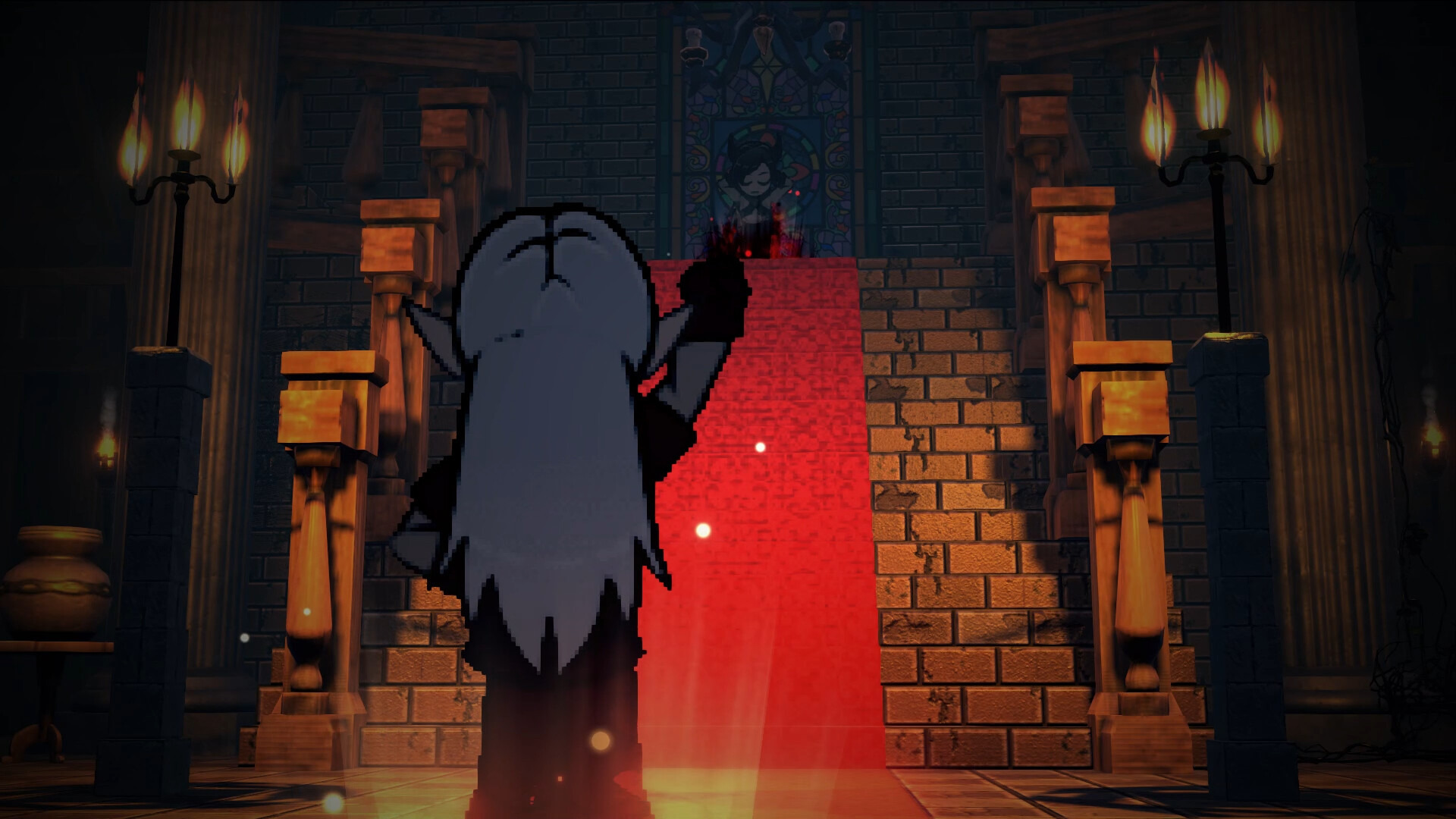
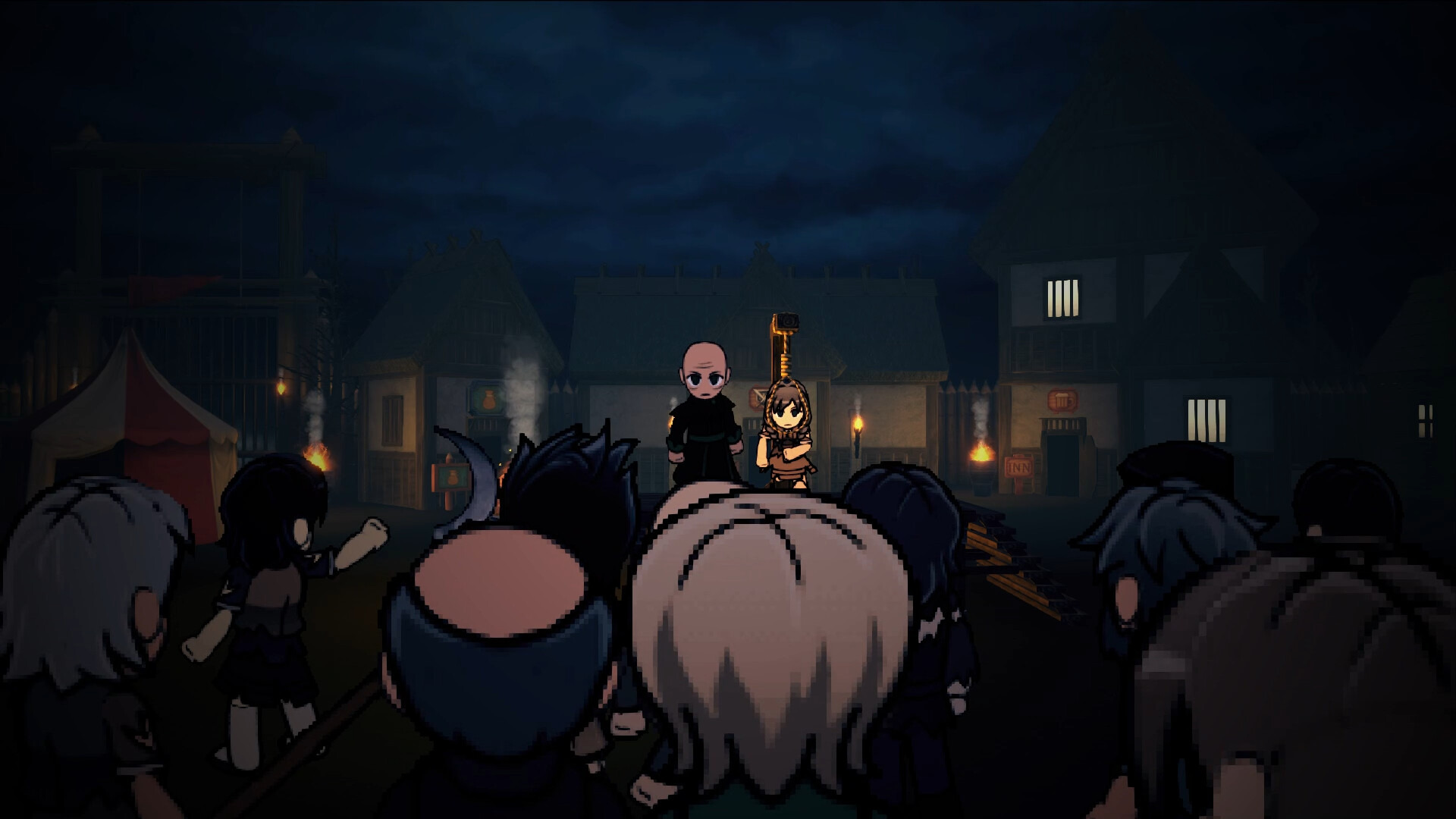
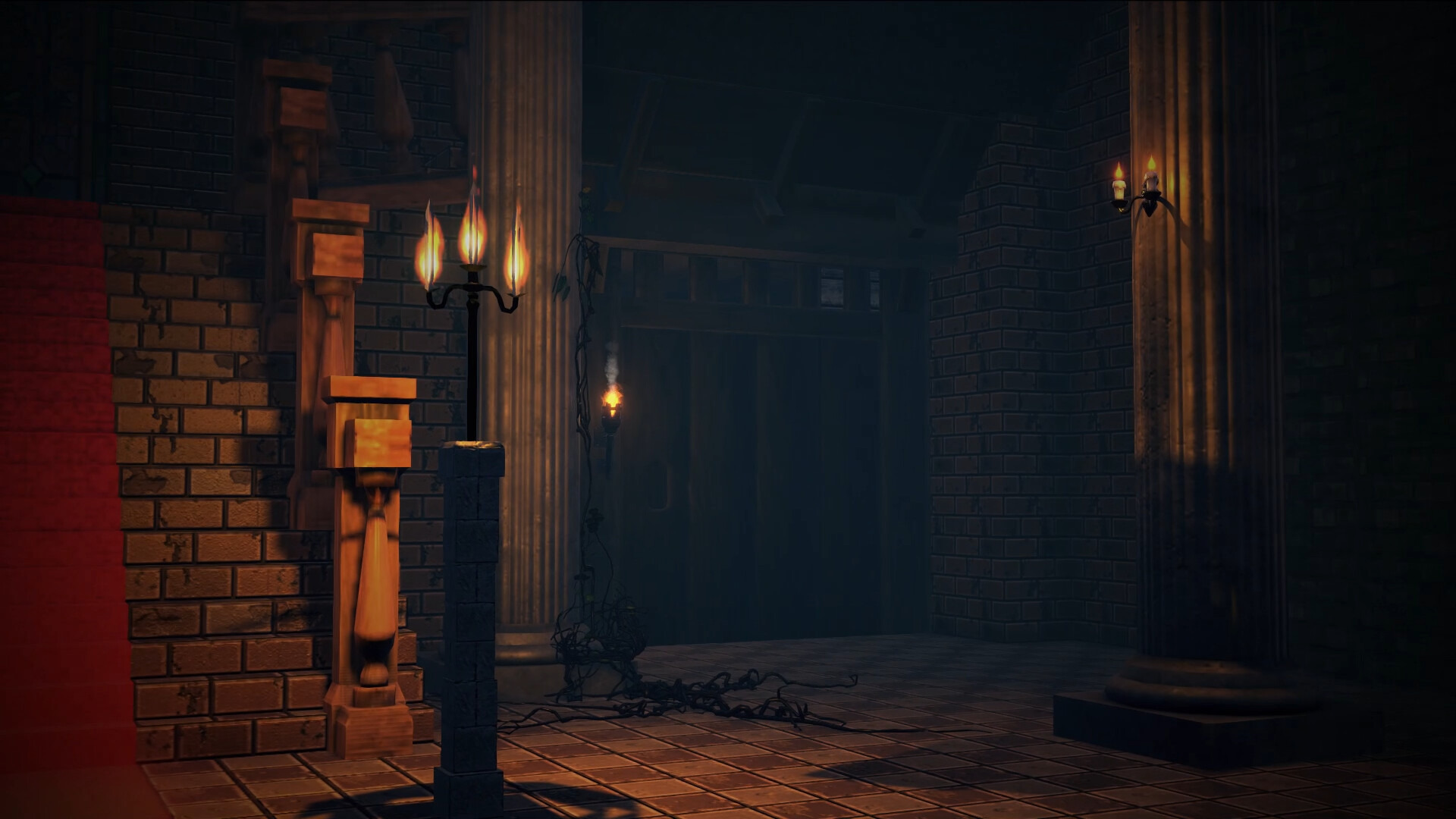
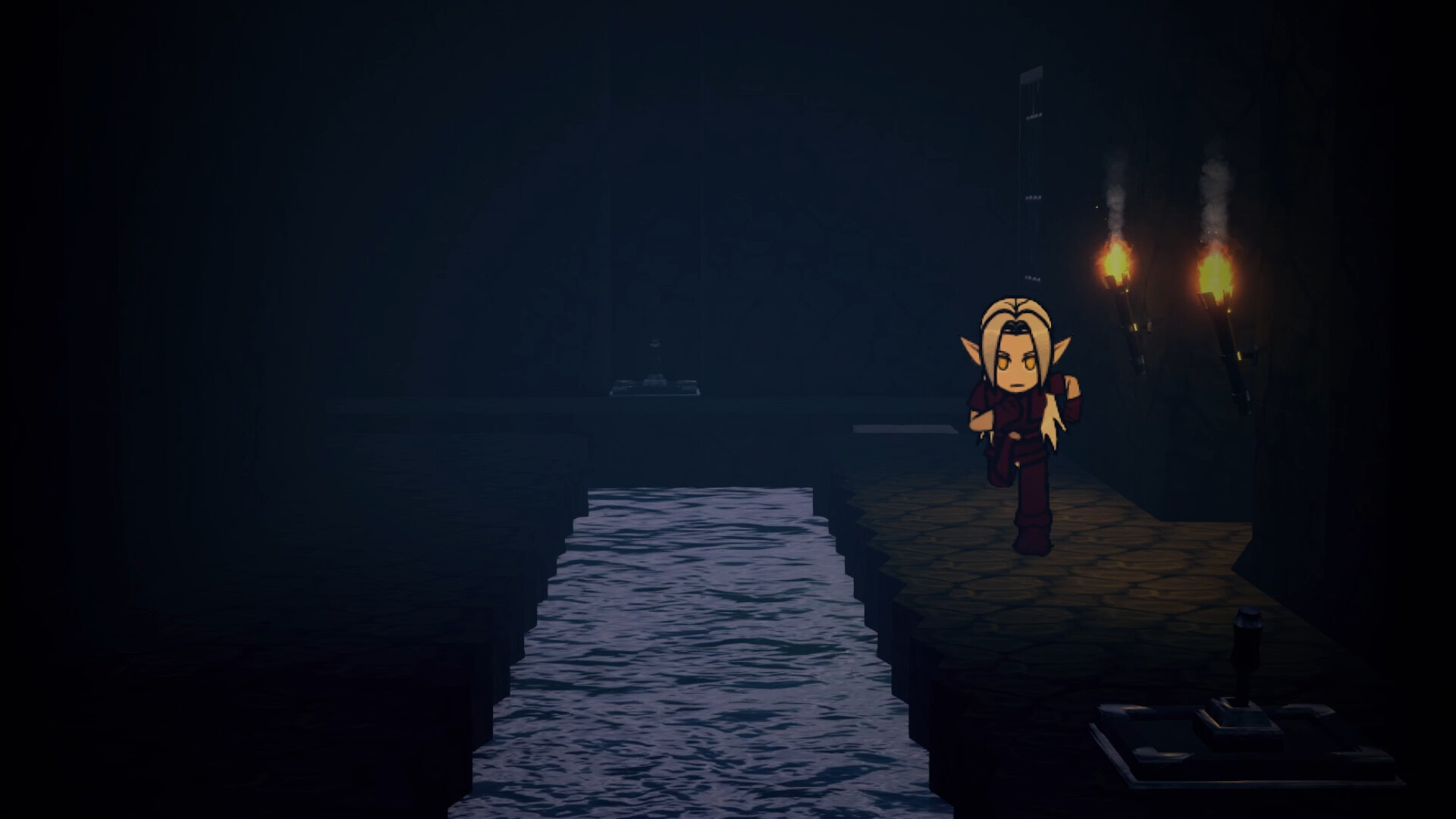
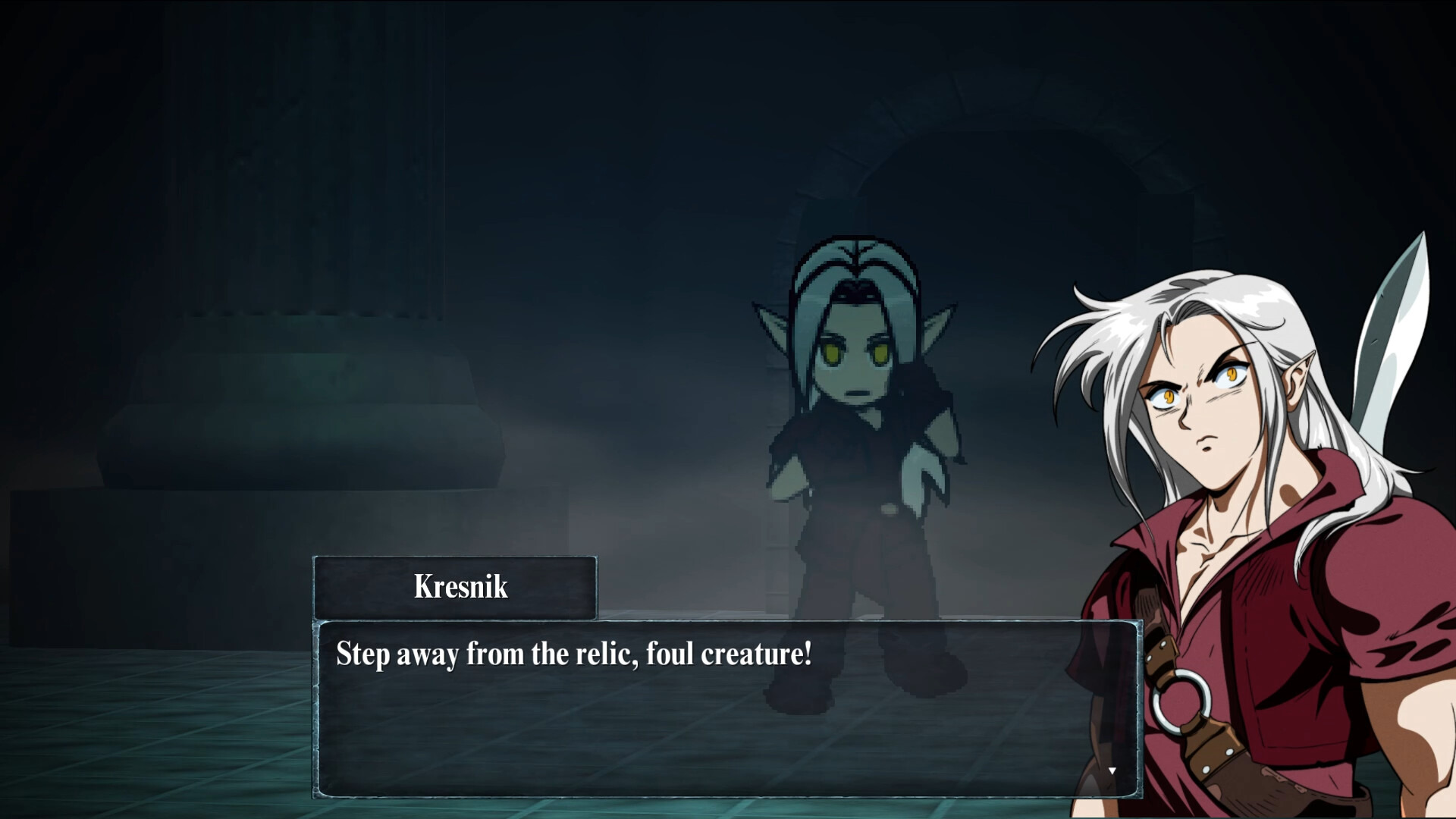
Visually, Kevin Musto goes for a mix that fits the genre: chibi-like characters in three-dimensional dungeons, large anime portraits in conversation, and a consistently dark, violet night-time mood. Castle, moon and torchlight give the images a clear gothic-horror stance, and rooms like the hall with the red carpet do stay with you.
It still is not a showcase. The spaces feel simple, the characters often sit awkwardly in the 3D scenery, and the appeal comes more from the idea than from fine detail. For an indie JRPG the look is coherent and recognizable, but it is not distinctive enough to keep us playing on style alone.
The trail of a missing wife goes cold
The setup is strong: as a Kresnik we hunt a creature wearing the face of our missing wife, and we arrive at an abandoned castle in Dyad’s Lower Plane. The lore around Kresnik and Kudlak sounds like a dark fairy tale, and the cinematic cutscenes are clearly meant to carry that.
Once we are in the game, too much stays hidden. Things we needed in order to follow the story are never properly said, and the presentation does not help us keep the thread. You can tell someone here can write – as a told adventure, though, Evil Origin never lands for us. The trail goes cold before it has us hooked.
A hub, dungeons and sidequests that never take hold
Evil Origin wants to be more than a short string of fights. Nogard is meant to work as a hub with sidequests, the dungeons are supposed to run deep, and there is room to explore beside the main path. On paper that is the JRPG loop we want from a game like this.
We never got far enough into that loop. Progress feels unclear, and before the hub and the dungeons can pull us in, the appetite for another hour is already gone. We cannot put a reliable playtime on that. What is planned would be enough for a full RPG – what reached us is a framework without pull.
A launch that still feels unfinished
Technically, the strongest impression is this: the build does not feel finished. Not as a list of individual crashes, but as an overall sense that information, flow and polish are still missing. We asked ourselves fairly early whether to keep going or put the game down – and we chose the latter.
Missing recommended system specs and an unclear Steam Deck status fit that murky picture, but they do not replace a clean presentation inside the game. For a 1.0 launch on 19 November 2026 we expect a version that carries us through the first hours. We did not get that here.
No voices, and no music that lingers
There is no voice acting; the interface and subtitles are in English. The atmosphere is carried by the images and the setting, not by a soundtrack that stays in our heads. It never gets in the way, but it also never lifts the game.
In a horror JRPG that leans so hard on mood, we wanted more from that side. As it is, the sound stays politely in the background, while the unfinished presentation already pulls us out of the world sooner than we would have liked.