

In Dice Have No Eyes by Franek and Max Cahill, we roll our way through a surreal roguelike about luck and greed. The 1.0 release landed on Steam on 20 November 2026 after Early Access. We lost runs because we could not stop rolling — and that is very much the point.
In this review
Luck and greed, told in dice
Click a circle to see the reasoning.
How we rate
- 90–100Legendary
- 80–89Very good
- 7970–79Good
- 60–69Okay
- 50–59Mediocre
- < 50Weak
79GoodOur verdict
At PlayInsider we rate every game individually and always against the expectations of its genre. We judge the story of an action game or adventure by its narrative quality. In a simulation or management game, on the other hand, what counts is what the genre typically offers. This keeps our ratings fair and comparable within a genre.
One more roll in Dice Have No Eyes – or lose the lot
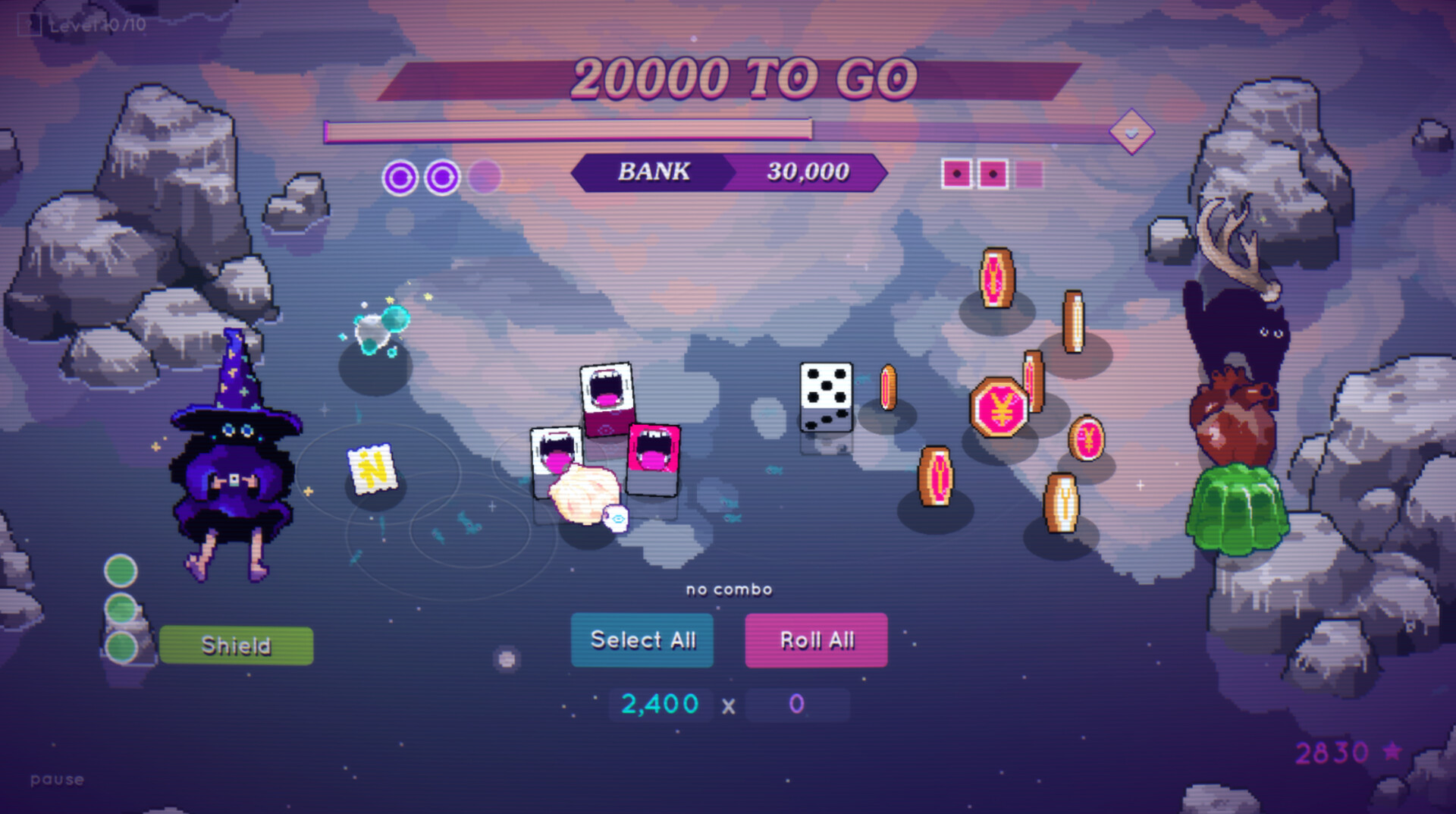
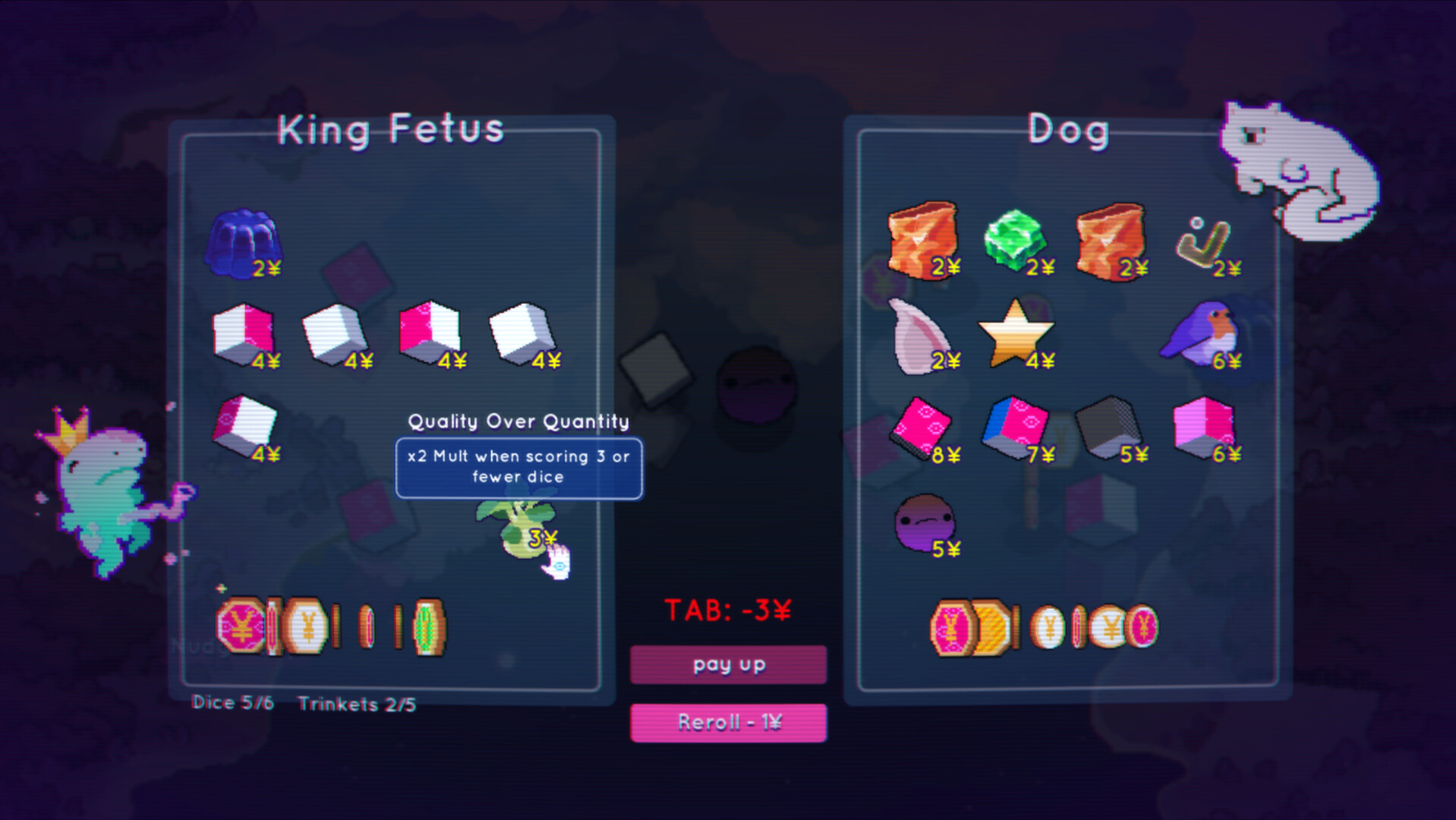
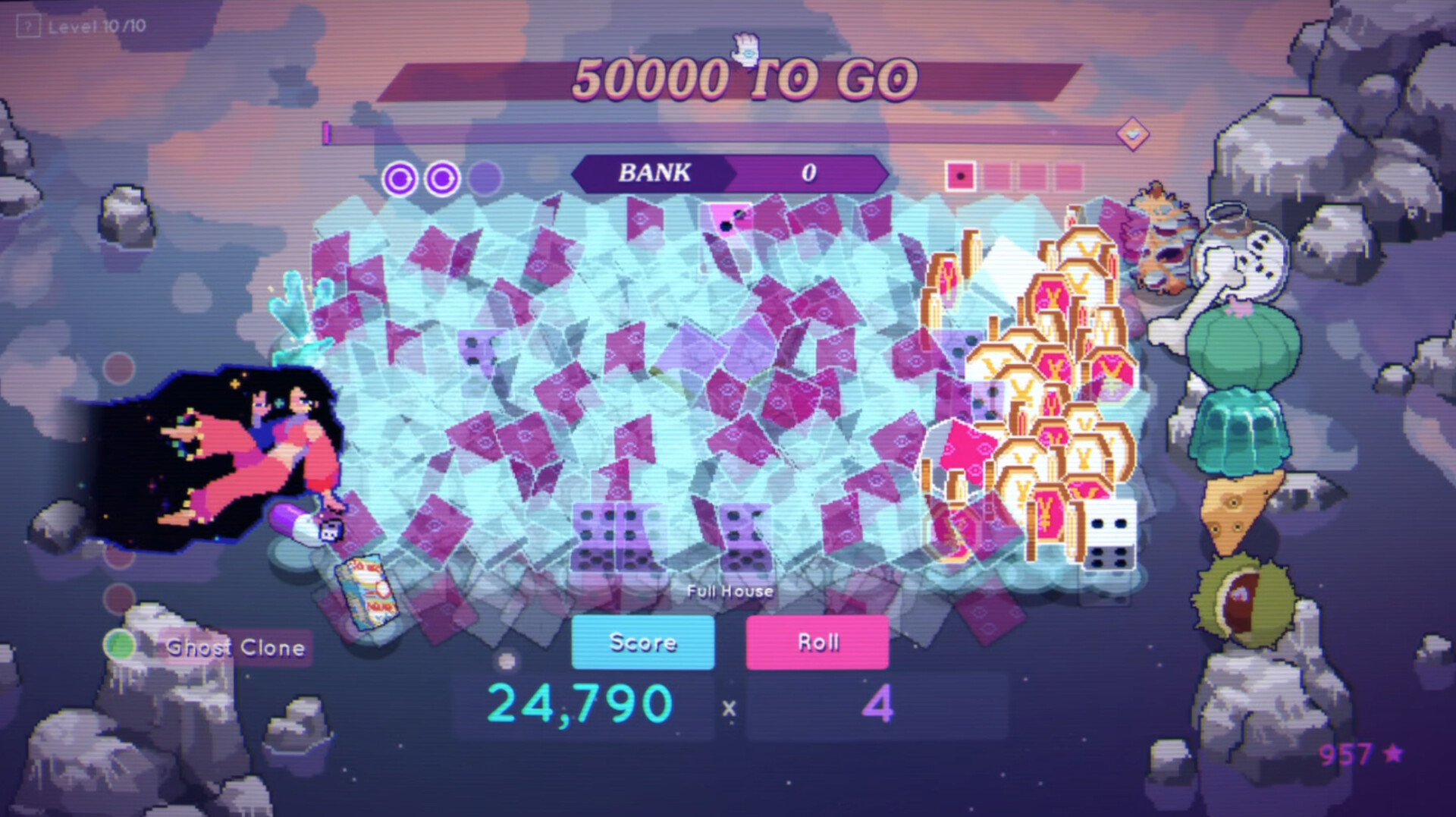
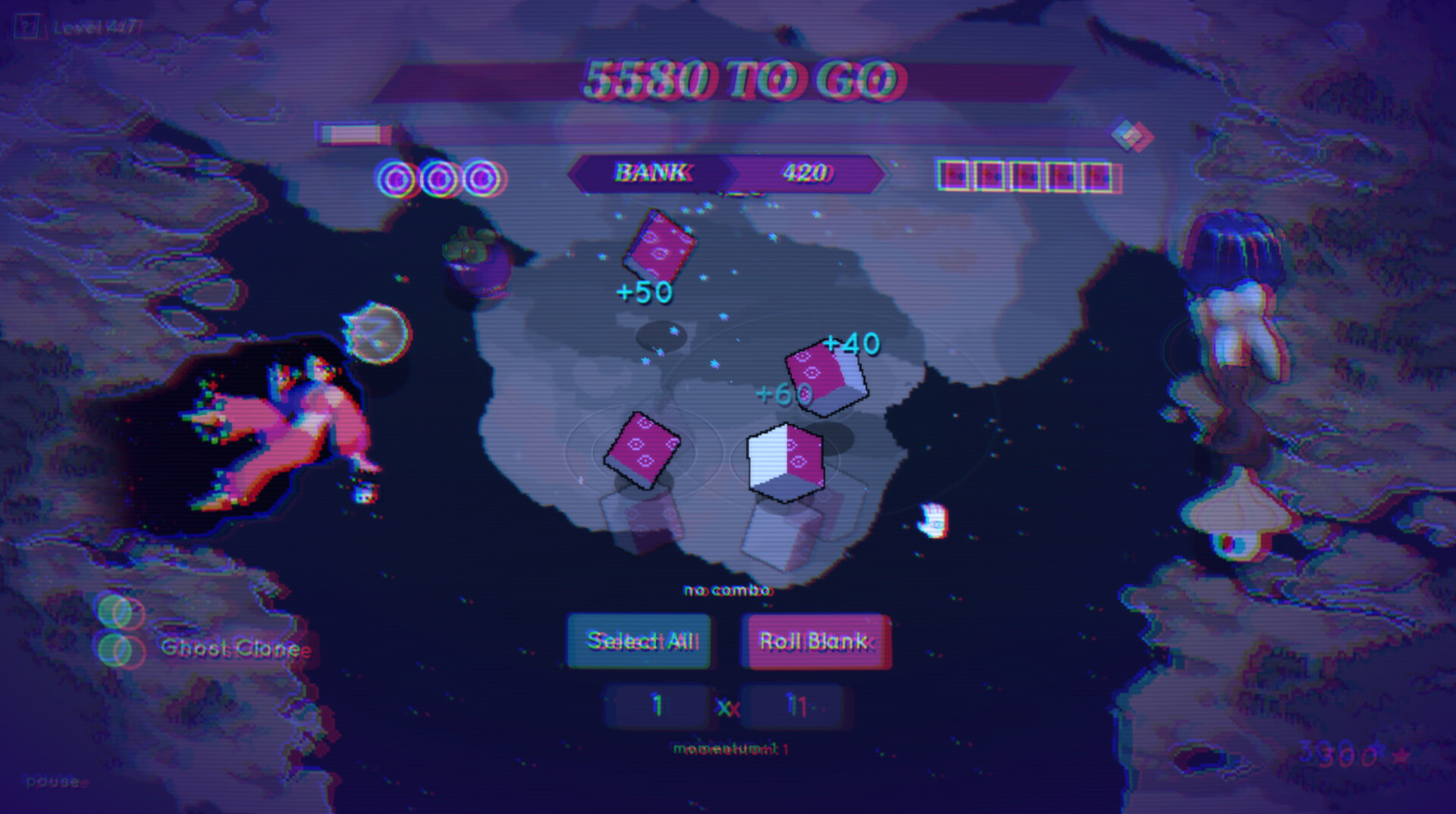
At its core the game is one question: do we roll again, or do we bank what we have? We build combos, feed and upgrade our dice, grab trinkets that bend the rules, and push toward a score target. The hook is not a single lucky throw. It is the second before it — when we know greed might end the run, and we do it anyway. The dice handling is surprisingly satisfying. Drag, select, grab everything at once, flick with a bit of precision: we got used to it quickly and felt it as part of the game, not a chore. The opening is harsh, though. Our first runs felt muddy, almost stubborn, until the systems settled. And yes, luck can close out a promising run with little warning. That fits the theme, but it stings when it feels unfair rather than consistent.
A world that looks like it rolled itself
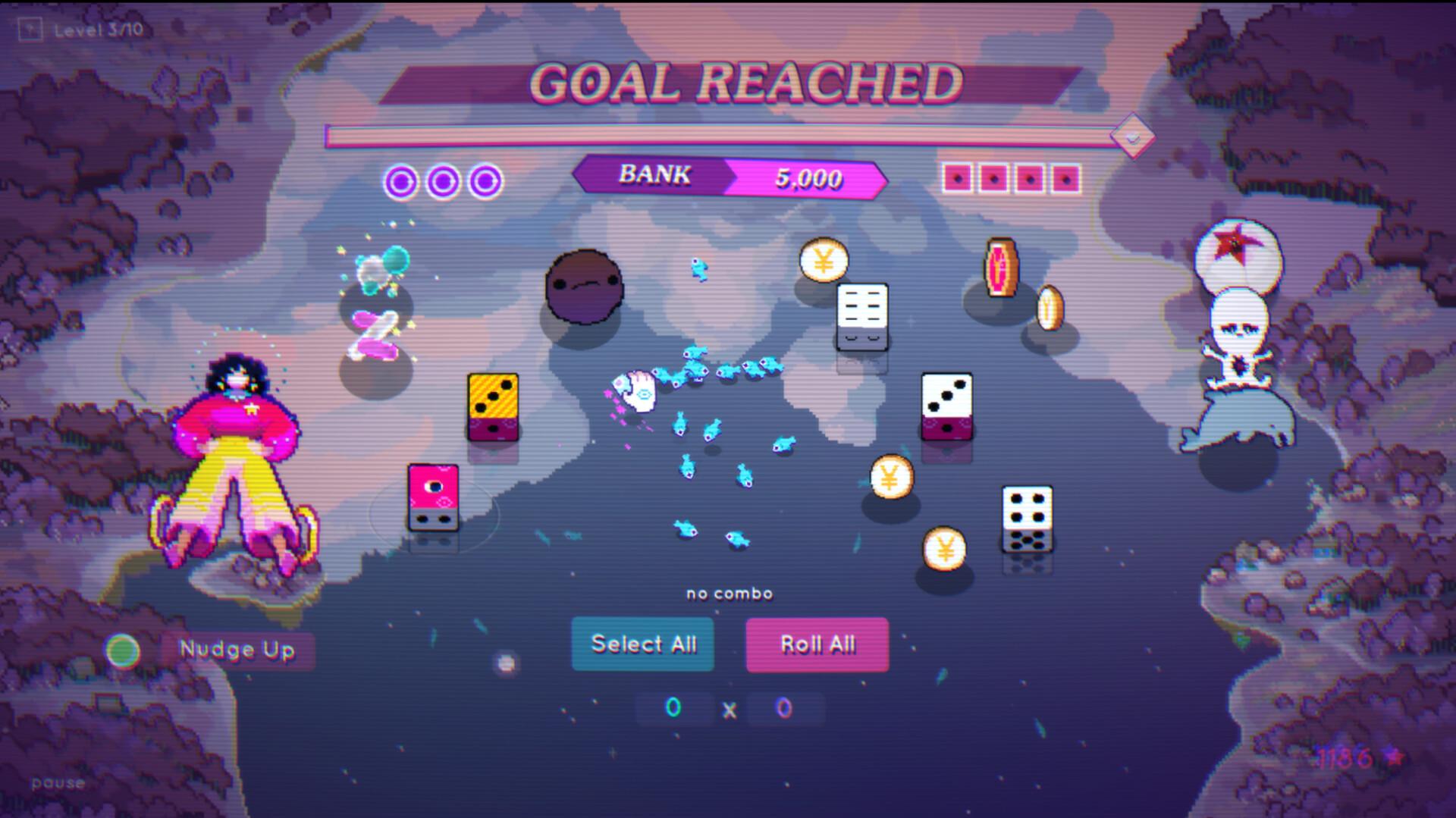
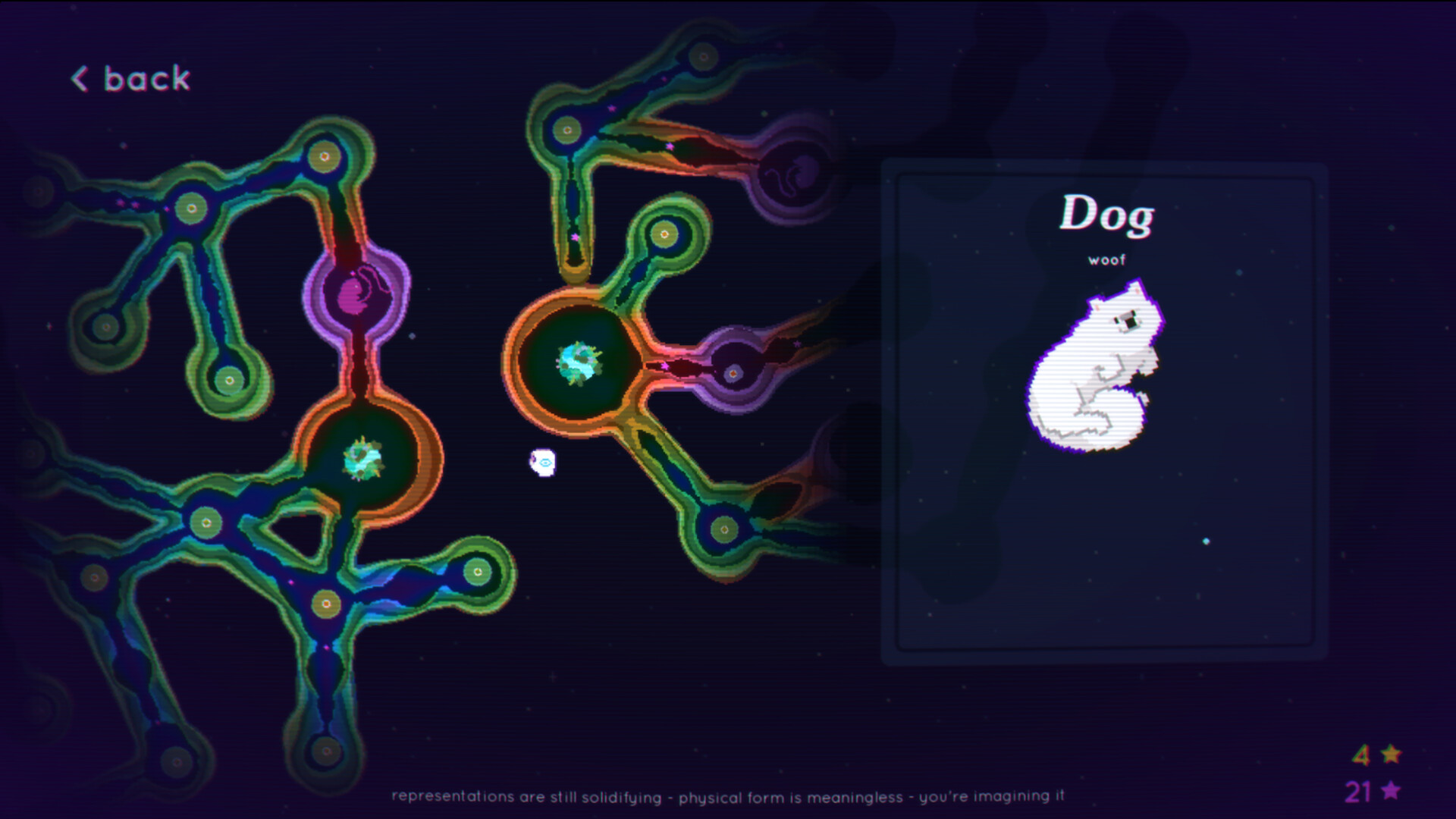
Visually, the game is instantly recognisable. Soft islands, a violet sky, clouds hanging like cotton against the cliffs, and characters who never quite play it straight. The presentation is colourful, flat and oddly calm — a contrast to a game that keeps trying to take everything from us. That tension is deliberate, and it works. Small details do more than big effects: a cat on the progress screen, off-kilter portraits, a board that still feels inviting when the numbers up top start to twitch. For a game about rolling dice, this is an unusually strong look. More than once we started another run simply because the world would not let go.
King Fetus, God, and other bad ideas
The game does not tell a traditional story. Instead, the narrative drips in through encounters, items and endings: King Fetus, a meeting with God, odd figures who feel like they wandered out of a dream. This is not a campaign in acts. It is a mood that settles over many runs. For a dice roguelike, that is the right scale. The writing does not need to take us by the hand; it needs to suggest that something stranger sits behind the greed. It does, even if we sometimes wished for a denser, more connected story. What remains is character — and the urge to see the next ending.The runs are short; understanding takes longer
Individual runs are compact; the real scope sits in learning. Over time we get better at knowing when to stop, which trinkets twist a run, and which paths are worth taking. There is meta-progression, but the game rewards understanding more than unlocked numbers. That is what kept us playing longer than any single run would suggest. How many hours you end up with depends on how hard the loop grabs you. We cannot pin an honest fixed playtime to it; for us it was several evenings of short, often undisciplined attempts. Achievements, leaderboards and cloud saves are in place. If you want a campaign you can tick off, you may miss a sense of being done. If you like digging into systems, there is depth here.Smooth on desktop, fiddly on the Deck
On a PC, the game was largely steady for us. Mouse control is clear, and there are comfort options for the camera and volume, plus mouse-only and touch-only modes. Full controller support is included. After several rounds we did hit the occasional crash — rare, but often enough that we will not brush it aside. On Steam Deck the game is listed as Playable, and that is how it felt: playable, but less precise than on desktop. Selecting and targeting dice was noticeably fiddlier for us. We could not find a USK or PEGI rating. Official, detailed minimum and recommended system requirements were not available to us in a form we could record here; if those values are added later, they belong in the table below this text. The interface includes German; the voice-over is English.