

In Space Station Designer, from Polar Motion and publisher Slitherine Ltd., we take over a private aerospace company: we build stations starting in low Earth orbit, hire astronauts, fulfil contracts and are eventually meant to attempt a space elevator to the Moon. The construction and management game launched on 18 November 2026. We played the campaign and the construction tools – and spent most of our time fighting the technical side and the interface.
In this review
Plenty of systems, not enough stability
Click a circle to see the reasoning.
How we rate
- 90–100Legendary
- 80–89Very good
- 70–79Good
- 60–69Okay
- 50–59Mediocre
- 48< 50Weak
48WeakOur verdict
At PlayInsider we rate every game individually and always against the expectations of its genre. We judge the story of an action game or adventure by its narrative quality. In a simulation or management game, on the other hand, what counts is what the genre typically offers. This keeps our ratings fair and comparable within a genre.
The work only starts once you reach orbit
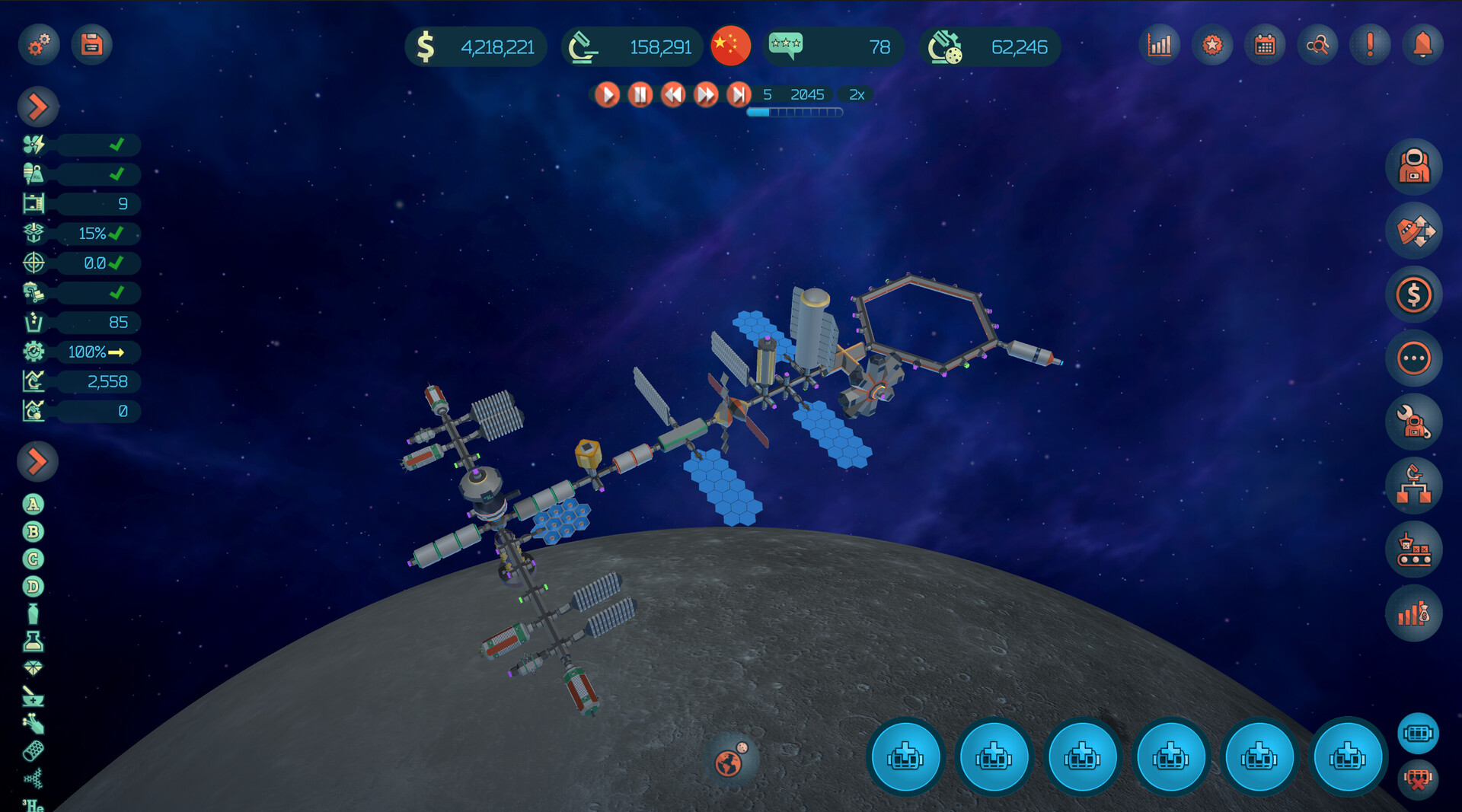
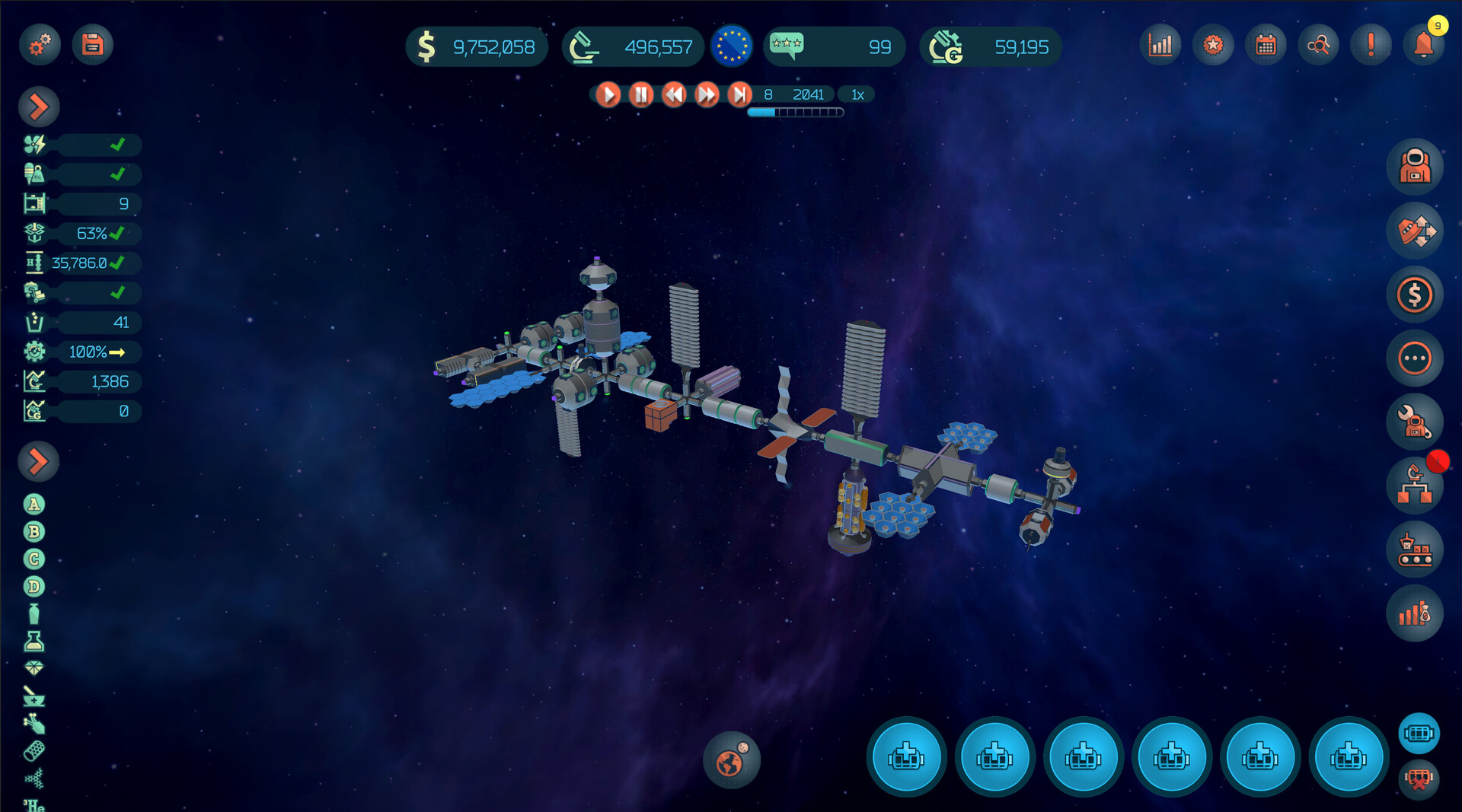
We start with a core module in low Earth orbit and are meant to work our way up: higher orbits, the Moon, and eventually a space elevator as the big goal. Along the way we recruit crew, keep life support, power and supplies in balance, fulfil contracts and decide whether to manufacture, lease space or host tourists. Polar Motion, the studio behind the game, point to a lineage with Buzz Aldrin’s Space Program Manager: sober management rather than a spectacular flight sim.
When Space Station Designer tries to make us a company
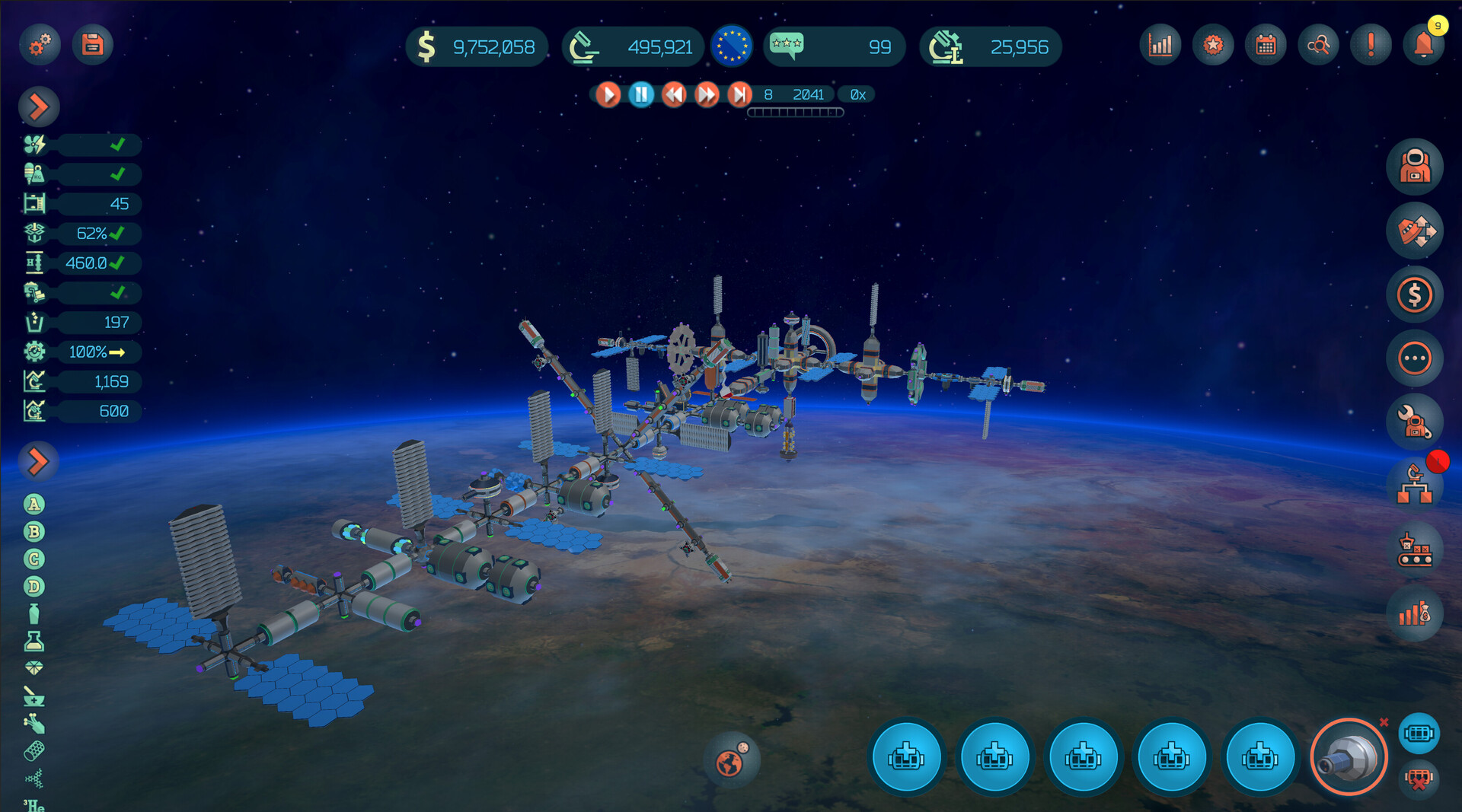
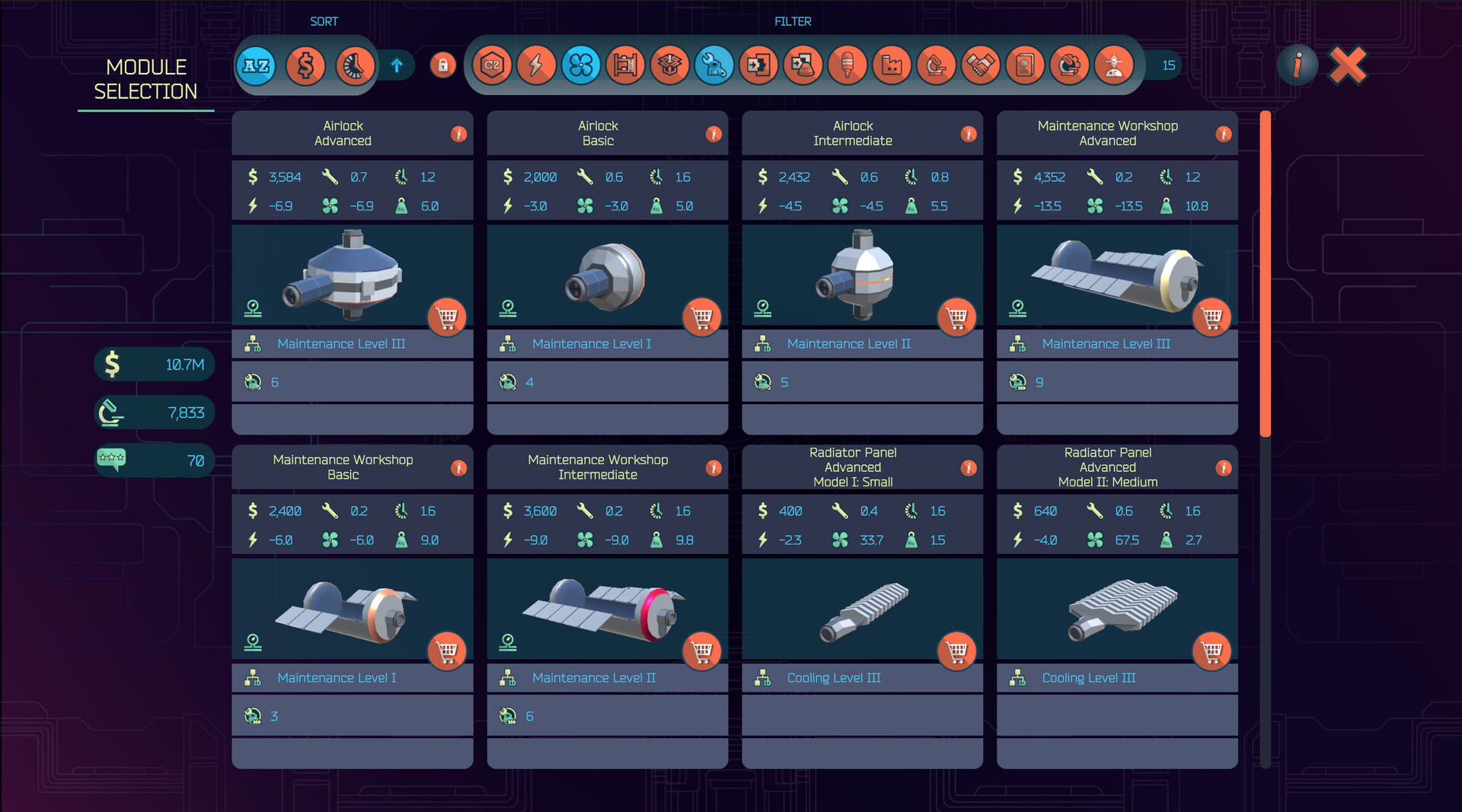
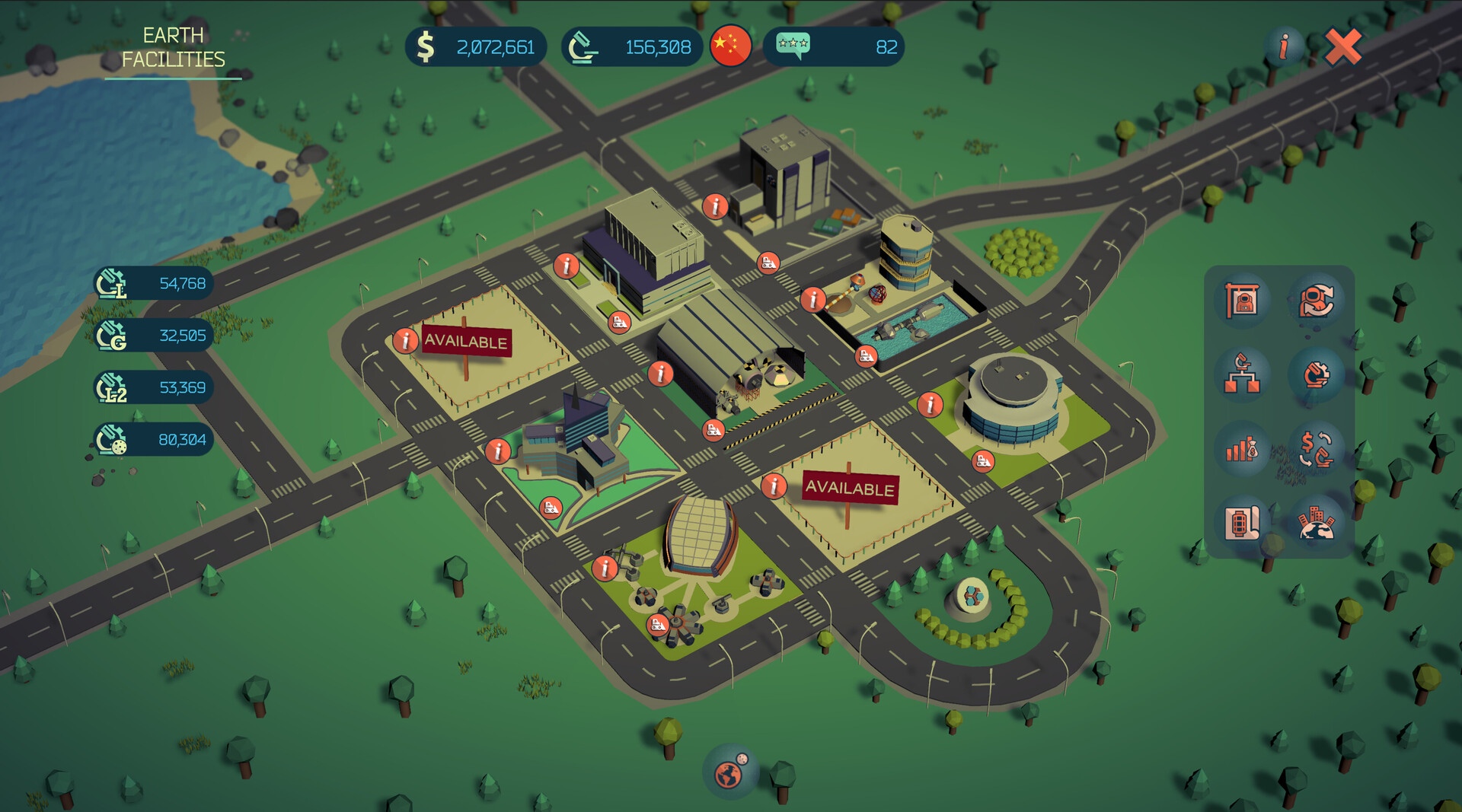
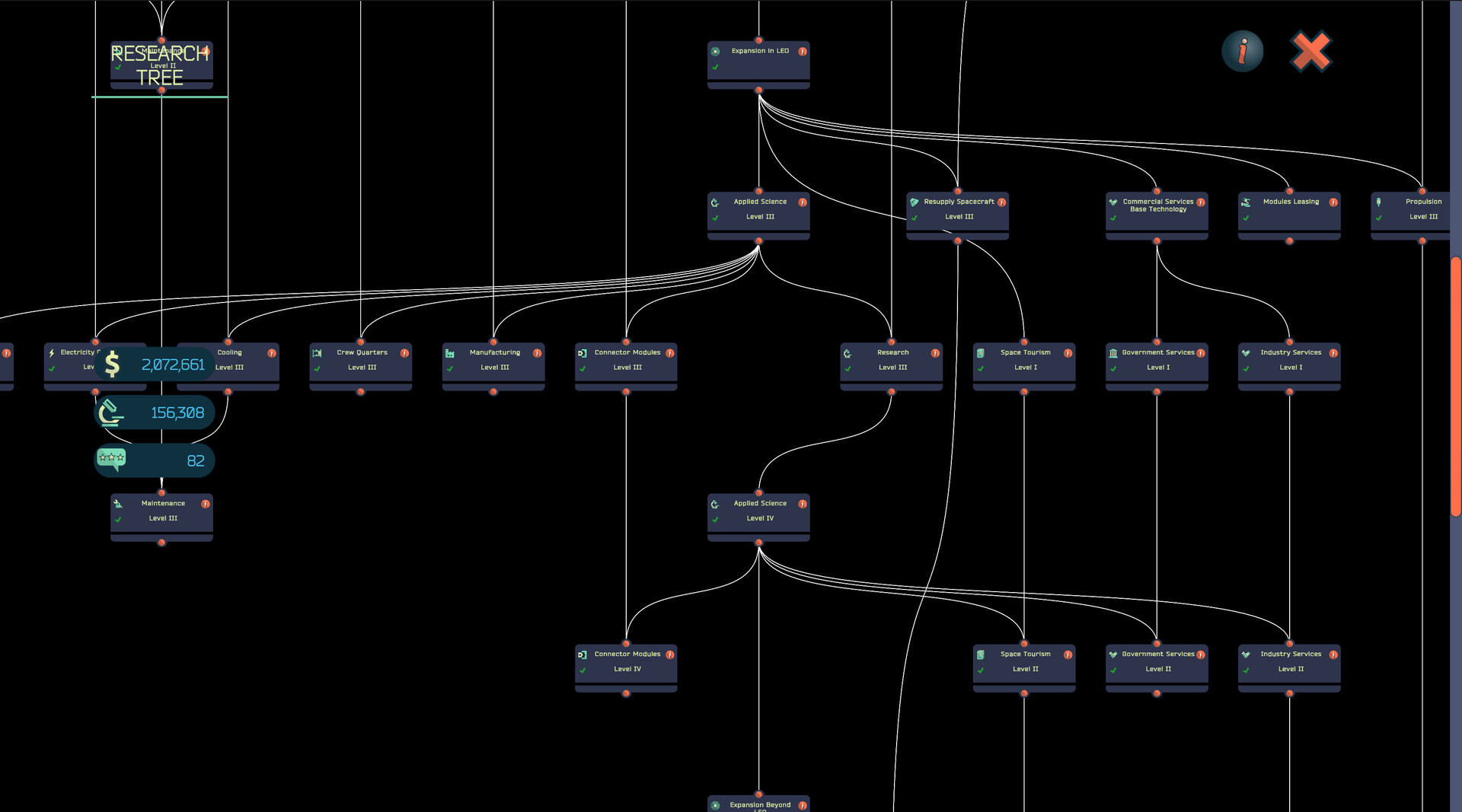
The systems themselves are the real idea. Power, cooling, inventory, thrust and center of mass, crew morale and special skills interlock, and freely assembling more than 150 modules is fun in the good minutes. Right where the game should guide us, though, it turns sticky: repairs drag on, sequences often cannot be skipped, and the crew is hard to sort by skill. What is meant as a deep simulation kept tipping into busywork for us. Maintenance in particular spoiled the evening. Modules break, partial successes feel like failures, and at some point the calendar turned into an endless repair chain. Launches and some screens repeat without giving us the sense of a smart decision. The potential of the economic loops stays visible – the flow does not deliver on it.
Campaign, sandbox and a rough onboarding
There are three modes: a campaign that eases us into the rules through objectives and is officially meant to last more than 40 hours, a sandbox with contracts from day one, and a free builder with no budget limits. On paper that is a smart split. In practice the tutorial is the first obstacle. It is long, slow and held us in place instead of moving us forward safely. We had to restart some sections; others simply stopped teaching. Space Station Designer does not tell a traditional story, and a management sim does not have to. The campaign structures the opening through contracts, and there is little narrative beyond that. For the genre that is fine, but it stays pale. If you just want to build, the free builder is the better fit – provided the technical side cooperates. Modding is supported, with tools and documentation; we did not push that ourselves, but it is worth noting as an open toolbox.Crashes, lost saves, static images
The technical side is why we cannot recommend the game right now. Space Station Designer crashed on our first launch – with a typical Unreal message – and only opened after several tries. Later, save games vanished, alt-tabbing could end a session, and parts of the interface would not click reliably. When a management game cannot hold onto your progress, the nicest module set collapses with it. Officially a fairly modest Windows 10 machine is enough; the store does not list recommended specs, and the minimum requirements are in the table below this text. The interface is English only, and there is no voice-over. There is no Steam Deck verification. In this state the technical side is not just awkward, it is a clear reason to wait.The music stays; the rest does not keep up
The music is the most pleasant part of this launch. It carries the quiet building stretches, stays with you and never gets in the way. It does not become more than a fitting backdrop, and with no voice-over the audio stays functional. Compared with crashes and lost saves, the soundtrack is clearly the stronger side – enough to hold us in the good minutes, not enough to make us forget the rest.System requirements (PC)
| Minimum | |
|---|---|
| Operating system | Windows 10 or neuer |
| Processor | 2,0 GHz Dual-Core |
| graphics card | graphics card with DirectX-10-Unterstützung |
| Memory | 4 GB RAM |
| storage | 3,5 GB |